Physical Address
304 North Cardinal St.
Dorchester Center, MA 02124
Physical Address
304 North Cardinal St.
Dorchester Center, MA 02124

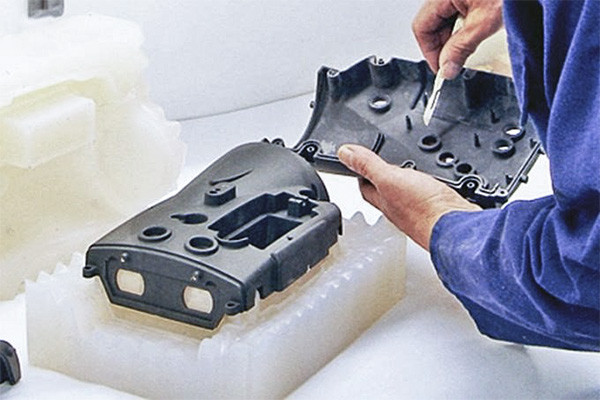
Getting from a finished design to a part you can actually hold and test used to mean weeks of waiting on tooling. That bottleneck is largely gone. Rapid prototyping services now combine CNC machining, 3D printing, sheet metal fabrication, and vacuum casting under one roof, letting product teams validate designs, run small production batches, and catch flaws before committing to expensive molds. Among these methods, vacuum casting service occupies a specific and often underused niche: parts that look and perform like injection-molded production pieces, at prototype-friendly volumes and cost.
Rapid prototyping isn’t one process — it’s a toolkit. A capable manufacturing partner typically offers several methods and helps you pick the right one for the part’s purpose, not just its geometry.
The gap most teams run into is quality consistency. Broad-network platforms handle low-complexity parts well but struggle with the tight tolerances and specialized materials that precision projects demand. If your part needs 0.005mm accuracy or exotic materials like PEEK, a platform built for speed over depth may not be the right fit — it’s worth asking upfront how deep a provider’s engineering review actually goes.
A rushed or skipped Design for Manufacturing review is a quiet, expensive problem. Industry estimates suggest that in 2026, over 70% of R&D teams ran into serious production yield issues traced back to inadequate DFM review. That’s not a rounding error — it’s the difference between a prototype that ships on schedule and one that gets sent back for rework. Before choosing a provider, ask what their DFM process looks like and whether it’s automated, manual, or both.
Vacuum casting service — also called urethane casting or polyurethane casting — starts with a master model, usually machined or 3D printed. A silicone mold is built around that master, and resin is then poured into the resulting cavity under vacuum to create a production-like replica.
The vacuum step isn’t cosmetic. Pulling air out during the pour prevents voids and air pockets that would otherwise ruin the part’s surface and structural integrity. The payoff is a part with a genuinely production-grade look — smooth, consistent, and largely free of the layer lines or support marks you’d see from 3D printing.
It depends on what you’re testing. Vacuum casting wins on finish and material properties; 3D printing wins on speed and iteration cost for early-stage geometry checks. Vacuum casting produces parts with high precision, a smooth surface, and clear texture without additional finishing, and it’s generally the better choice for small-batch production with real appearance requirements, while 3D printing suits rapid iteration and highly customized one-off designs. A single silicone mold can also produce a meaningful run of parts quickly — useful when you need more than one unit for user testing or a trade show, not just a single proof of concept.
One honest trade-off: silicone molds degrade after roughly 20-25 casts, so vacuum casting isn’t meant for ongoing production — it’s a bridge to injection molding, not a replacement for it.
Match the process to the goal. Need a same-day geometry check? 3D printing. Need a handful of parts that look and feel like the real product? Vacuum casting. Need thousands of units? Injection molding is still the endpoint. The best rapid prototyping service partners will tell you this honestly instead of pushing whichever process they’re set up to sell.