Physical Address
304 North Cardinal St.
Dorchester Center, MA 02124
Physical Address
304 North Cardinal St.
Dorchester Center, MA 02124

Federico Fellini rarely let chance stay in the background. In “La Dolce Vita,” a coin toss decides which direction a scene turns. In “8½,” the protagonist’s fate seems to hinge on half-remembered dreams rather than plans. Fellini treated luck the way other directors treated a lead actor: it got close-ups, its own rhythm, its own moment to speak. That choice was not decoration. It reflected something the director understood about audiences – people do not just want to see outcomes, they want to watch chance arrive.
That same instinct explains why games built entirely around unpredictable moments still pull people in decades later. A spinning wheel, a shuffled deck, a randomized draw – each one stages the exact tension Fellini chased on set, except the viewer is also the participant. Platforms such as sankra casino lean into that theatrical quality deliberately, framing each round as a small scene rather than a flat transaction, which is part of why the format has aged better than plenty of mid-century cinema techniques.
Fellini’s camera lingered on faces at the exact second luck resolved, not before and not after. That timing mattered more than the outcome itself. A win or a loss registered less than the half-second of not knowing, stretched out until the audience felt it in their chest.
Modern game design borrows the same trick, whether the designers ever watched a Fellini reel or not. A slot reel that pauses fractionally before the final symbol lands, a roulette ball that audibly clatters before settling – these are close-ups on chance, engineered the same way a director frames a face. The mechanism is old. Only the medium changed.
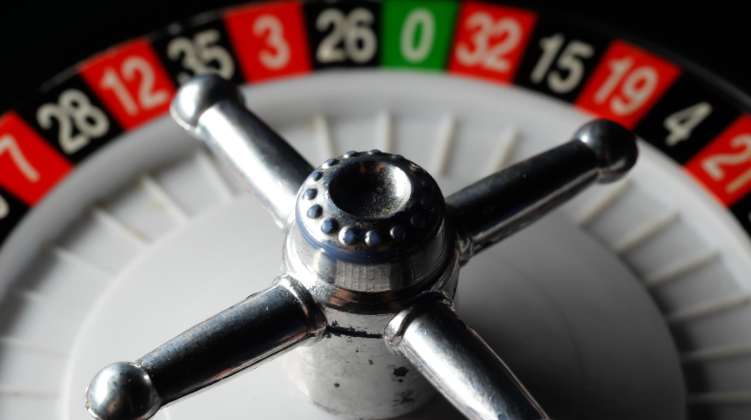
Roulette is arguably the purest version of this idea. Thirty-seven or thirty-eight pockets, one ball, no skill inputs from the player once it’s spinning. Everything the player can control happens before the wheel turns; everything that matters happens after, in full view, with nowhere for the outcome to hide.
That visibility is the entire appeal. Card games can bluff, dice can be cupped, but a spinning wheel performs its verdict in the open, the way a stage actor delivers a line the whole house can hear. European roulette’s single-zero layout gives the house a 2.7% edge, a number worth knowing before assuming the “performance” is free.
Blackjack tells a different kind of story – one with choices layered inside the chance. A player decides to hit, stand, split, or double, and each decision reshapes the odds without ever eliminating them. That’s closer to a Fellini protagonist than a roulette ball: someone making small, human choices inside a current they cannot fully steer.
Basic strategy, played correctly, trims the house edge down to roughly 0.5%, which is why blackjack remains a favorite among players who want the drama of chance without surrendering every lever. The tension is real, but it isn’t blind.
| Game | Player Input | Typical House Edge |
| European Roulette | None once spinning | 2.7% |
| Blackjack (basic strategy) | High | ~0.5% |
| Slot Machines | None | 4-10% |
| Baccarat (Banker bet) | Minimal | 1.06% |
A few scenes from Fellini’s own catalog make the parallel explicit, even if he never wrote a casino script outright:
None of these are casino scenes, but each one treats an unresolved outcome as the emotional center of the shot, which is precisely the sensation modern game design tries to manufacture on purpose.
Psychologists have a name for this: the illusion of control, first documented in gambling contexts back in the 1970s. People consistently overestimate their influence over random events when given even a small, symbolic action – choosing their own lottery numbers, for instance, rather than accepting a random pick. Fellini’s characters live inside that same illusion, convinced their small gestures shape outcomes that are, in truth, indifferent to them.
Game designers know this instinct well and build around it. Letting a player choose when to stop a reel, or pick a betting pattern, doesn’t change the math, but it changes the feeling – and feeling is what keeps someone in the scene a little longer. Understanding that gap between control and the sensation of control is the most useful thing a player can carry into any game of chance, on screen or off.